

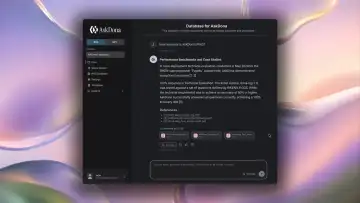

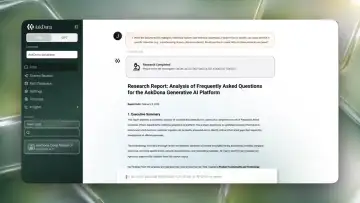







本レポートでは、スーパーコンピュータ「富岳」のサポートサイトにおける生成AIチャット「AskDona(アスクドナ)」(以下、AskDona)の導入・運用実績を報告する。生成AIチャット「AskDona」の導入・運用は、株式会社GFLOPS(ジーフロップス、以下「当社」)が理化学研究所計算科学研究センター(以下、R-CCS)と共同で行ったものであり、本レポートではこの一連の取り組みを「本プロジェクト」と称す。当社とR-CCSは、本プロジェクトで得られた知見を公開し、それによって生成AI技術の社会実装を促進することを目指している。
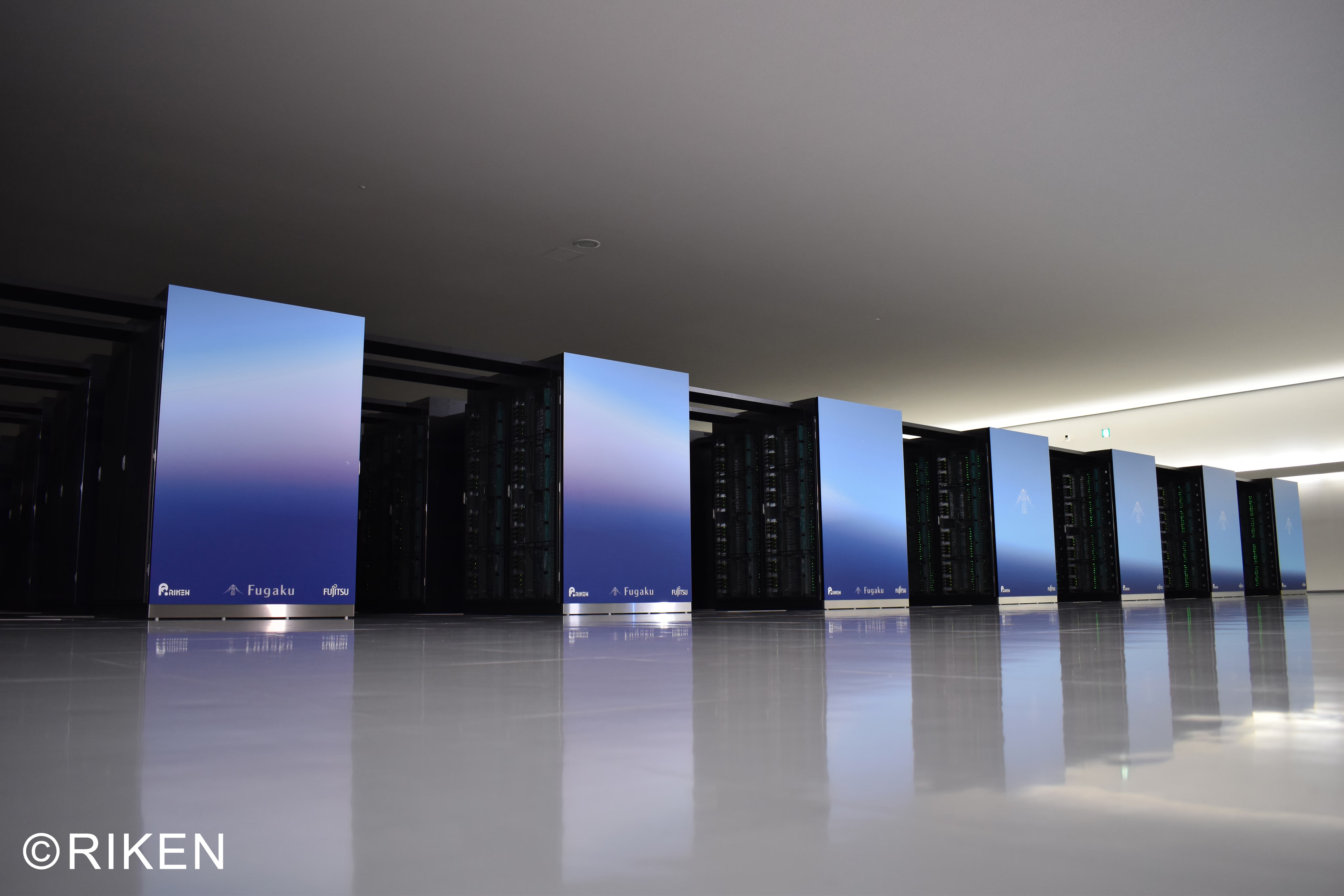
R-CCSは、スーパーコンピュータ「富岳」(以下、「富岳」)の利用者へ質の高い支援を提供するため、利用者専用の富岳サポートサイトを運営している。「富岳」は年間を通じて多数の利用者によって活用されており、その利用者数は増加傾向にある。「富岳」に関する様々な情報や活動を報告する富岳年報によると、2023年度の利用者数は約3,800名、一日あたりの平均ログインユーザー数(アクティブユーザー数)は約395名であり、これは2022年度(利用者数: 約2,916名、アクティブユーザー数: 約355名)と比較して、それぞれ1割以上増加している。
「富岳」を利用するユーザーは、富岳サポートサイトを通じて質の高いサポートを受けることができる。しかし、R-CCSの従来のサポート体制は有人対応が中心であり、近年の利用者数の増加に伴ってサポート担当者の業務負荷が増大し、サポート業務の効率化が課題となっていた。
サポート負荷増大の背景には要因がいくつか存在したが、その最大の要因は富岳に関する情報量の豊富さである。富岳を利用して計算科学的な手法で課題を解決していく上で、富岳を利用するための正しい知識が必要であり、そのための詳細な技術情報がマニュアル・利用手引書等の文書としてPDF・HTMLなどの形式で提供されているが、そのボリュームは数万ページ分に及ぶ。利用者が疑問や質問を持った際に、複数の場所に分かれて掲載されているこれらの膨大とも言える文書の中から、必要な情報を探し当てて自己解決を図ることは容易でない場合があり、サポート担当者への質問チケットとして発行されることが頻繁にあった。豊富な情報源から、単なる検索ではなく、利用者の質問意図に沿った適切な回答を自動的に提示するサービスの実現が望まれていた。また、寄せられる多数の質問の中から共有価値が高いと考えられるものを適宜抽出し、その回答とあわせて要約したFAQ記事として富岳サポートサイトに掲載しているが、実務で役に立つこれら多数のFAQ記事をマニュアルや利用手引書とあわせて横断的に有効利用してもらう環境の整備も必要であった。
こうした背景から、R-CCSは、大規模言語モデル(LLM)を活用した生成AI技術を活かし、富岳サポートサイトにおけるRAGのデータソースに基づく自動回答生成サービス、ならびに従来の単純な検索機能に代わる、利便性が高く、あいまい検索や類似検索が可能な高度な検索機能の導入を検討した。
当社は、生成AI技術とデータ分析力を強みとする企業として、独自のRAG(Retrieval-Augmented Generation:検索拡張生成)ソリューションを基盤とした生成AIチャット「AskDona」を提供している。当社が本プロジェクトへ参画するにあたり、まずはR-CCSが定めた技術要件を満たすことを確認するための「導入前技術評価」が2024年5月に実施され、AskDonaの初期バージョン(dona-rag-1.0)が、R-CCSが定める技術要件(回答精度80%以上)に対し設定質問へ全問正解(回答精度100%)を達成し、大容量データから高い回答精度を実現する基本的なRAGの仕組みが評価されて採択された。
本レポートで報告する実績は、生成AIチャット「AskDona」が富岳サポートサイトに導入された2024年7月9日時点から2025年6月時点までのものである。これらの実績は共同検証を行ったR-CCSの協力のもとに得られたものである。R-CCSは、日本の科学技術とAI活用の発展に貢献するという観点から、本取り組みで得られた知見の公開を推進している。
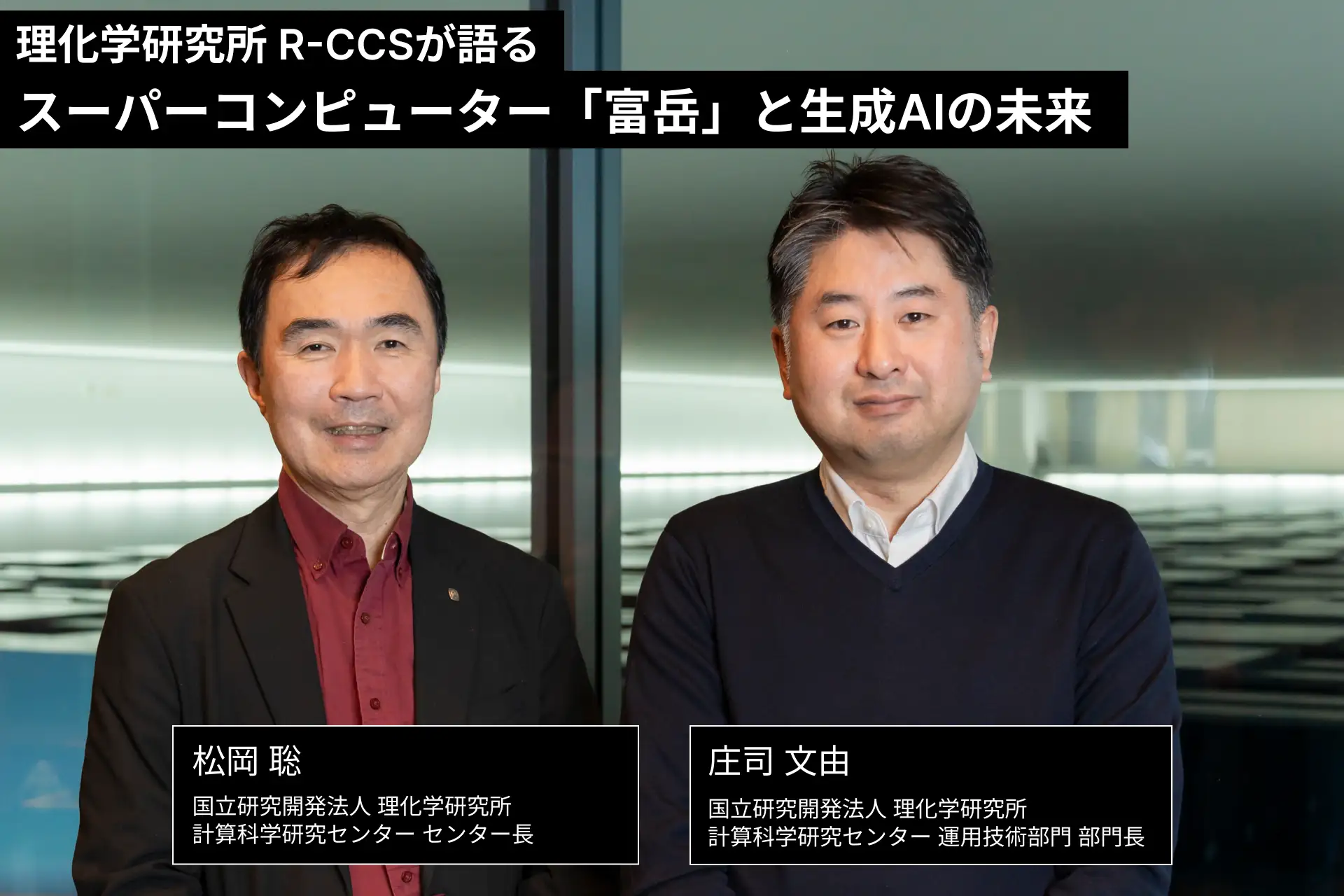
インタビュー記事: 理化学研究所 計算科学研究センター(R-CCS)が考えるスーパーコンピュータ「富岳」と生成AI活用の未来
本レポートの構成は以下の通りである。まず第2章では、生成AI導入後の利用者の行動変容に焦点を当て、質問傾向や自己解決プロセスがどう変化したかを実際の利用データから定量的・定性的に分析する。特に質問傾向が質的に変化し、複数の文書を横断的に参照する必要がある「複合的なクエリ」が増加したことを実際のデータから明らかにする。続く第3章で、これらの利用動向的な変化が、富岳サポートサイトのR-CCSの対応業務へどのような具体的な効果をもたらしたかを、有人サポートの負荷軽減と品質維持の両面から明らかにする。そして第4章では、第2章で提示した課題への技術的な解決方法として、次世代RAGアーキテクチャの有効性を比較検証によって実証する。具体的には、「複合的なクエリ」を含む質問セットに対し、AskDonaの最新RAGアーキテクチャと複数の標準的なRAGシステムとの回答精度を比較することで、実務条件下で求められる技術的要件を明らかにする。
This report presents the results of introducing and operating the generative AI–based chat system “AskDona” on the support site of the supercomputer Fugaku. The introduction and operation of the generative AI chat system, AskDona, were jointly conducted by GFLOPS Inc. (hereafter, “our company”) and the RIKEN Center for Computational Science (hereafter, R-CCS). In this report, we refer to this series of activities as “the Project.” Through the Project, our company and R-CCS aim to publicly share the insights gained and thereby promote the social implementation of generative AI technologies.
R-CCS operates a dedicated support site for users of the supercomputer Fugaku to provide high-quality assistance. Fugaku is used extensively throughout the year by many users, and the number of users continues to increase. According to the Fugaku Annual Report, which summarizes various activities and information related to Fugaku, the number of users in FY2023 was approximately 3,800, and the average number of daily login users (active users) was about 395. These figures represent increases of more than 10% compared with FY2022 (users: approx. 2,916; active users: approx. 355).
Users of Fugaku can obtain high-quality support through the Fugaku Support Site. However, the traditional support system at R-CCS has been primarily based on human operators, and as the number of users has grown in recent years, the workload of support personnel has increased, making the efficiency of support operations an urgent issue.
Several factors contributed to the growing support burden, the most significant of which was the sheer volume of information related to Fugaku. To solve computational science problems using Fugaku, users must possess accurate operational knowledge. To that end, extensive technical information is provided in the form of manuals, user guides, and other documents distributed as PDFs or HTML files. The total volume of such material reaches tens of thousands of pages. When users have questions, it is often difficult for them to locate the necessary information scattered across these vast materials, making self-resolution challenging and leading to frequent submission of support tickets. There was a clear need for a service that could automatically provide appropriate answers aligned with the user's question intent — something beyond simple keyword search. In addition, R-CCS regularly extracts commonly asked questions from the numerous inquiries received and publishes their answers as summarized FAQ articles on the Fugaku Support Site. To enable users to utilize these valuable FAQ articles together with the manuals and guides in an integrated, cross-referenced manner, an improved information-access environment was also required.
Given this background, R-CCS began exploring the introduction of a generative AI–based automatic response system grounded in RAG (Retrieval-Augmented Generation) using data from the Fugaku Support Site, as well as the implementation of a more advanced search function capable of fuzzy and similarity-based retrieval, offering significantly greater convenience than a conventional simple search.
Our company provides the generative AI chat system AskDona, which is built on our proprietary RAG solution and leverages our strengths in generative AI technologies and data analysis. To participate in the Project, our company first underwent a “pre-deployment technical evaluation” in May 2024 to verify that the system satisfied R-CCS's technical requirements. The initial version of AskDona (dona-rag-1.0) achieved perfect performance — answering all test questions correctly (100% accuracy) against the R-CCS requirement of at least 80% accuracy — and was selected for the Project based on its ability to deliver high-accuracy responses even when processing large-scale datasets.
The results reported in this document cover the period from July 9, 2024 — the date AskDona was deployed on the Fugaku Support Site — through June 2025. These results were obtained with the cooperation of R-CCS as part of our joint evaluation activities. R-CCS promotes the public disclosure of insights gained through this initiative from the perspective of contributing to the advancement of Japanese science, technology, and AI utilization.
Interview Article: The Future of Supercomputer “Fugaku” and Generative AI Utilization as Envisioned by the RIKEN Center for Computational Science (R-CCS)
The structure of this report is as follows. Chapter 2 examines changes in user behavior after the introduction of generative AI, analyzing both quantitative and qualitative aspects of how users' question patterns and self-resolution processes have evolved. In particular, we demonstrate, using real-world usage data, that question patterns have shifted in quality, with increases in “composite queries” that require cross-referencing multiple documents. Chapter 3 clarifies the concrete impact of these usage trends on the support operations of R-CCS, focusing on both the reduction of workload for human support staff and the maintenance of support quality. Chapter 4 then addresses the technical solutions to the challenges identified in Chapter 2, presenting comparative evaluations that demonstrate the effectiveness of next-generation RAG architectures. Specifically, we compare the response accuracy of AskDona's latest RAG architecture with several standard RAG systems using a set of questions that includes composite queries, thereby identifying the technical requirements needed for real-world operational environments.