









A Global Organizational Challenge: Critical Knowledge Becomes Person-Dependent
The concentration of organizational knowledge is not unique to Japan.
Across industries and countries, experienced employees accumulate knowledge that is difficult to capture fully in manuals or databases. They learn which sources are reliable, how apparently conflicting rules should be reconciled, which facts are material, when an exception may apply, and when a case should be escalated.
Some of this knowledge is explicit and can be written down. Much of it is tacit: it is acquired through practice, observation, repeated decision-making, and interaction with other experts.
A 2024 systematic review describes the loss of organizational knowledge as a prevalent issue for twenty-first-century organizations and identifies generational change as one of the situations in which structured knowledge-transfer procedures become particularly important.
The underlying organizational risk is therefore global:
- critical knowledge is concentrated in a limited number of people;
- procedures describe standard cases but not how experts handle exceptions;
- information is distributed across documents, systems, departments, and jurisdictions;
- the reasoning behind past decisions is not preserved in a reusable form;
- new employees do not know which source should take priority;
- different teams interpret the same policy differently; and
- knowledge may leave the organization when experienced employees retire, resign, transfer, or change roles.
Research on organizational turnover similarly treats the departure of organizational members as an important mechanism through which knowledge can be lost.
The problem is not that organizations have no information. The problem is that the information required for a decision is often fragmented, while the method for interpreting it remains inside the experience of particular individuals.
Japan Makes the Problem Particularly Visible
Japan provides a clear and important example of this global challenge.
Japanese companies have historically developed firm-specific expertise through relatively long employee tenure, on-the-job training, internal rotation, and knowledge transfer between experienced and less experienced employees.
OECD data published in 2026 show that average job tenure in Japan was 12.4 years, above the OECD average, and that 46.7% of workers had remained with the same employer for at least ten years. [1]
This employment model has enabled companies to develop deep organizational expertise. An experienced employee may understand not only what a manual says, but also how the rule has historically been interpreted, which internal department owns a particular issue, what evidence is normally accepted, and how exceptional cases have previously been resolved.
At the same time, the model creates a particular form of vulnerability.
When knowledge has been transferred mainly through long-term working relationships, observation, mentoring, and organizational memory, it may not be sufficiently documented for someone who did not participate in those relationships.
The result is that:
- a manual may contain the rule but not the practical interpretation;
- a database may contain the case record but not the reasoning behind the conclusion;
- a new employee may find several relevant documents without knowing which one takes priority;
- an experienced employee may answer correctly without being able to explain every intermediate step; and
- the organization may lose important judgment knowledge when that employee transfers or retires.
Japan should therefore not be presented as the only country facing this problem. It is better understood as a country in which the dependence on long-tenured, firm-specific expertise makes the problem especially visible.
The Same Structural Problem Appears Differently in Other Markets
The same underlying risk exists outside Japan, although it may arise through different employment and organizational structures.
In organizations with higher employee mobility, knowledge may not remain with one person for several decades. However, it may leave the organization more frequently through resignation, recruitment by competitors, short-term contracting, restructuring, outsourcing, or changes in project teams.
In multinational companies, knowledge may be divided across headquarters, regional offices, local subsidiaries, external advisers, and shared-service centers. A global policy may be written in one language, implemented through local procedures in another, and interpreted differently across business units.
Following a merger or acquisition, two organizations may have different definitions, systems, approval authorities, risk standards, and historical practices, even after they formally adopt the same group policy.
In rapidly growing markets, companies may recruit and expand faster than they can document processes and train specialists. The challenge is not the retirement of long-tenured experts alone; it is the inability of organizational knowledge systems to keep pace with expansion.
In highly specialized sectors, an organization may depend on a limited number of engineers, clinicians, compliance professionals, risk officers, or technical operators whose practical knowledge cannot be replaced immediately through recruitment.
These are different organizational conditions, but they lead to the same structural question:
Can the organization reproduce a reliable decision process without depending on the memory, personal network, or undocumented judgment of a particular individual?
This is why organizational knowledge loss is not a Japanese problem with a Japanese solution. It is a global problem that takes different forms depending on labor-market structure, organizational culture, industry, and regulatory environment.
Ageing and Labour Shortages Are Also International Challenges
Japan is among the countries most visibly affected by demographic ageing, but it is not alone.
The OECD identifies labor and skill shortages as a growing challenge across its member countries. It attributes persistent shortages not only to temporary economic conditions, but also to structural forces including population ageing, digitalization, decarbonization, and changing skill requirements. Shortages have remained particularly significant in areas such as healthcare and information and communication technology. [2]
Germany provides one example outside Japan. The OECD projects that Germany’s working-age population could shrink by approximately 9% over the following decade, with a particularly high share of workers over the age of 55 in several occupations already experiencing shortages. [3]
The underlying pressures differ by country, but many organizations face some combination of:
- an ageing workforce;
- retirement of experienced professionals;
- shortages in specialist occupations;
- rapid changes in required skills;
- growing dependence on external or international talent;
- greater employee mobility; and
- pressure to train new employees more quickly.
The question is therefore not only how to replace departing workers. It is how to retain, update, and distribute the knowledge required for reliable work.
Older employees should not be treated merely as knowledge sources who must transfer information before leaving. They remain valuable professionals whose experience can support current operations, mentoring, process improvement, and the validation of new systems. Research has found that effective knowledge transfer between older and younger employees can help organizations reduce knowledge loss and maintain competitiveness.
AI should support this transfer process, not reduce experienced employees to documents to be extracted.
Workforce Diversity Is Not the Risk—Implicit Processes Are
Many countries are responding to labor shortages through a combination of productivity improvement, greater participation by women and older workers, reskilling, and international recruitment.
Migration alone cannot resolve the effects of population ageing, but the OECD concludes that it can help mitigate labor shortages. Migrant workers already play important roles in sectors including healthcare, agriculture, construction, accommodation, and information and communications technology. [4]
This development should not be framed as a problem caused by people from different countries making inherently different or less reliable judgments.
The risk does not come from workforce diversity.
The risk comes from an organization expecting employees to understand criteria, terminology, exceptions, and historical practices that the organization has never made explicit.
Employees joining an organization may differ in:
- language;
- professional education;
- regulatory experience;
- familiarity with local legal terminology;
- knowledge of the company’s history;
- access to informal internal networks; and
- assumptions about authority, escalation, and documentation.
These differences can occur between nationalities, but they also occur between departments, professions, generations, acquired companies, and even employees who joined the same organization at different times.
A process that works only because employees have spent many years learning unwritten conventions is not a globally scalable process.
As workforces become more international, mobile, remote, and cross-functional, organizations need to make their decision processes more explicit. They need to:
- document decision criteria clearly;
- identify the authoritative source for each criterion;
- distinguish legal requirements from internal conventions;
- make materials accessible in relevant languages;
- identify which language version is legally or operationally controlling;
- record how legitimate exceptions should be handled;
- preserve the evidence supporting each conclusion;
- define when a case must be escalated; and
- ensure that equivalent cases are assessed according to equivalent standards.
These improvements do not benefit only foreign or newly recruited employees. They benefit every employee who needs to understand, review, challenge, or reproduce a decision.
The Global Problem Has Different Local Expressions
It is therefore useful to distinguish between the common structural problem and its local expression.
The common problem is:
Important organizational decisions depend on information and judgment that are fragmented, difficult to transfer, and insufficiently traceable.
The local expression may differ.
In Japan, the issue may be closely connected to long tenure, firm-specific training, retirement, and the loss of knowledge accumulated through long-term employment.
In a high-mobility labor market, the issue may be frequent turnover and shorter periods available for knowledge transfer.
In a multinational group, the issue may be differences in language, local regulation, policy interpretation, and decision authority.
In a rapidly expanding organization, the issue may be that hiring and operational growth move faster than documentation and specialist development.
In a regulated global industry, the issue may be the need to apply a common organizational standard while respecting different national laws, evidence requirements, definitions, and supervisory expectations.
The circumstances are different. The required organizational capability is similar:
The organization must be able to identify the applicable rules, collect the necessary facts, verify the evidence, expose uncertainty, document the basis of the assessment, and assign responsibility for the conclusion.
AI Should Externalize Decision Knowledge, Not Eliminate Local Judgment
The objective of AI should not be to force every country, office, or employee to produce the same answer regardless of context.
Global consistency does not mean global uniformity.
A headquarters policy may establish a common minimum standard, while local law imposes additional requirements. A document may be acceptable in one jurisdiction and insufficient in another. A global definition may differ from a local statutory definition. A decision that can be automated in one market may require human approval in another.
The appropriate objective is:
a consistent assessment discipline with locally valid conclusions
AI can support this by helping organizations:
- retrieve the applicable global and local sources;
- identify which source has priority;
- distinguish current documents from obsolete versions;
- compare requirements across jurisdictions;
- identify the facts and evidence required for a particular case;
- ask clarification questions based on those requirements;
- separate verified facts from assumptions;
- detect conflicts and missing information;
- prepare a preliminary assessment with citations; and
- escalate cases that require local professional or legal judgment.
The organization should preserve global controls for governance, security, evaluation, logging, and accountability, while allowing local regulations, terminology, evidence standards, and decision authorities to remain visible.
This is not the replacement of local expertise. It is a way to make local expertise accessible, reviewable, and reusable within a global organization.
A Japanese Deployment Addressing a Global Problem
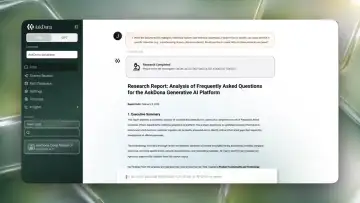
GFLOPS’s work with RIKEN Center for Computational Science and the Fugaku supercomputer is based in Japan, but the operational problem it addresses is not uniquely Japanese. Our own account of this work is published as AskDona for HPC. [5]
Fugaku users must work with an extensive body of technical manuals and documentation. Relevant information may be distributed across many documents, and answering a support question may require identifying, comparing, and interpreting multiple passages.
AskDona retrieves and synthesizes information from this controlled documentation to help users locate and interpret the material relevant to their questions.
The significance of the deployment is not that it proves AI can replace experts in every domain. Nor does it establish that a technical-support system can be transferred directly into autonomous financial, medical, insurance, or legal decision-making.
Its broader significance is that it provides an operational example of a source-grounded AI system supporting work in which:
- the knowledge base is extensive;
- information is distributed across many specialist documents;
- users do not always know how to formulate the complete question;
- the correct answer may depend on several sources;
- expert review remains important; and
- reducing the burden of information retrieval can improve access to specialist knowledge.
These conditions are found in organizations throughout the world.
The documents may be different. The languages, laws, products, and decision authorities may be different. But the structural problem is comparable: people need to locate the right information, understand how it applies to a specific situation, and preserve a traceable basis for the resulting conclusion. Details of the evaluation and operating results are published in the Fugaku × AskDona operational report. [6]
The Fugaku deployment should therefore be positioned as:
a Japanese implementation that demonstrates the potential of source-grounded AI to address a globally shared organizational problem
Extending the same architectural principles into regulated or high-impact work would still require jurisdiction-specific validation, stronger governance, careful handling of personal and confidential data, meaningful human oversight, and clear legal and professional accountability.
From a Japanese Example to a Global Direction
Japan makes the challenge of person-dependent organizational knowledge especially visible, but it does not define the limits of the problem.
Different countries arrive at the same challenge through different paths:
- long tenure and retirement;
- high turnover and labor mobility;
- specialist shortages;
- international recruitment;
- mergers and organizational restructuring;
- multilingual operations;
- rapidly changing regulation; or
- expansion across multiple jurisdictions.
GFLOPS’s direction should therefore not be described as exporting a solution to a uniquely Japanese employment problem.
It should be described as addressing a global need:
Organizations need a reliable way to transform fragmented documents, case data, institutional knowledge, and expert practices into decision processes that are searchable, evidence-based, reviewable, and accountable.
Japan is one important example.
Fugaku is one important implementation.
The wider opportunity is global.
GFLOPS aims to help organizations preserve and distribute critical knowledge across people, languages, departments, and jurisdictions—using AI to support evidence gathering, criteria checking, missing-information detection, and preliminary assessment while retaining accountable human authority for uncertain, exceptional, and high-impact decisions.
References
- OECD, Japan labour-market statistics, 2026 (average job tenure and share of workers with ten or more years of tenure).
- OECD, Labour and skill shortages across OECD member countries.
- OECD, Working-age population projections and occupational shortages in Germany.
- OECD, Migration and labour shortages.
- RIKEN Center for Computational Science, Introduction of AskDona on the Fugaku support website.
- GFLOPS Co., Ltd., Fugaku × AskDona operational report.